Will Republicans Save the Film Industry?
Before we get started, a reminder that Mona and I will be talking all things Odyssey for the next book club on Wednesday, September 16, at 1:30 p.m. Eastern. Here's my prep: Readi…
Before we get started, a reminder that Mona and I will be talking all things Odyssey for the next book club on Wednesday, September 16, at 1:30 p.m. Eastern. Here's my prep: Reading Emily Wilson's translation, as well as Christopher Nolan's script, and maybe just, you know, sneaking away to see it in 70mm. That counts as work, right? I'll run it by Sam Stein, see what he says.
And if you want to watch us live, you have to sign up for a Bulwark+ membership! If you don't, Paul Newman's gonna have my legs broke.
Save Sonny's legs - Join Bulwark+
FOLKS FROM THE MOVIE BUSINESS have gathered on a monthly call for the last year and a half to discuss efforts to push for a federal tax credit for their industry. Its purpose would be to help filmmakers keep their productions in the United States rather than chasing more money elsewhere in places like Ireland, the U.K., and Eastern Europe. The messaging that has come out of these meetings has been pretty straightforward, hitting on two big ideas: Any federal tax credit should be couched not as a "Hollywood" bailout but as an effort to end the offshoring of jobs from across the country, including from red states like Louisiana and Texas and purple states like Georgia; that's what it would take to get the bipartisan support needed to pass it during the current congressional session and keep it from being repealed in the future.
As momentum quietly grew, there was a logjam: Donald Trump. The president had previously pitched an inane and unworkable tariff on foreign-made films, much to the chagrin of these observers. No one was quite sure how such a proposal would work, and even if were implemented in a fairly straightforward way, it would amount to a massive tax on the industry that would be passed directly on to consumers - a tough sell to an industry already reeling from consumer complaints about everything from the cost of streaming subscriptions to the price of popcorn in movie theaters.
That logjam broke on Monday when Trump posted on Truth Social that "Congress should approve, immediately, a Federal Production Incentive to create Entertainment Jobs in America." Notably absent in the message was any mention of tariffs.
"I was elated to see that post," said Rep. Laura Friedman (D-Calif.). "I've been working with a very large coalition for the past year and a half on this concept." Friedman, herself a former film producer, represents a district that includes Hollywood and surrounding neighborhoods, as well as Burbank and Glendale. That's a huge chunk of the film industry, of course, but she was quick to emphasize the national nature of this deal. And she noted the absence of Trump's favorite policy tool: "The tariff idea, it just doesn't work, doesn't work for film because, you know . . . it's not the kind of thing that you can count up somewhere and put a number on."
Friedman highlighted the support in particular of Rep. Brian Jack (R-Ga.), who has, alongside iconic Oscar winner Jon Voight,1 been instrumental behind the scenes in getting this thing moving. Jack's district has been hit particularly hard by the flight of film production from Trilith, formerly known as Pinewood Atlanta, where Marvel shot many of its productions in the 2010s. Disney has moved much of their production to England, chasing lucrative tax credits of around 25 percent. (To get a sense of how much money is at stake here, Deadpool & Wolverine received over $100 million in tax rebates from the British government.)
Surprisingly, Jack has been quiet about Trump's post; his office didn't return an email and there's nothing on his website about it. At this point in Trump's presidency - as his approval ratings hit new lows and his record in primary races is increasingly mixed - his giving the okay alone may not be enough. The voters have a say too, and it's unclear how much voter support there would be for such a bill among the GOP base. That translates into some hesitancy to offer vocal support: I reached out to a handful of congressional offices in Republican states with some film industry and while several were happy to talk on background, only Rep. Vern Buchanan (R-Fla.) was willing to go on the record.
"This bill is about growing the American film industry, plain and simple. The best way to build support is to keep pushing the goal of this bill front and center: bringing film jobs and production back to the United States," Buchanan told me. "The film industry is not only important for business but has a huge impact in moving legislation as well. Disney's Black Beauty film helped animal welfare policy as it advocated for wild horse protection."
Share
Among the concerns cited by staffers were the lack of a concrete bill and an uncertainty of what an actual plan will look like; no one wanted to get out over their skis in support of the idea. But there was also worry that, quite simply, the optics on this were not great: No Republican wants to be seen as bailing out "liberal Hollywood."
Which brings us back to the messaging meetings described up top: There is a coordinated effort to ensure folks understand that this is a bill that will aid film workers in states across the country, not just Los Angeles and New York City. One office mentioned that they were waiting on a study from the Motion Picture Association that would forecast the economic benefits of a potential federal tax credit for the country as a whole.
The MPA emphasized just that point in a release following Trump's post. "A federal incentive would be a landmark step toward bringing more production to local communities in all 50 states, strengthening our nation's economy, and making our country a more competitive place to produce, create, and tell great stories," MPA CEO Charles Rivkin said in a statement.
It's a point Buchanan hit hard: "States like Florida, Louisiana, and Texas have built real production economies with crews, soundstages, and small businesses that depend on this work. Without a competitive incentive, those jobs and those dollars go overseas."
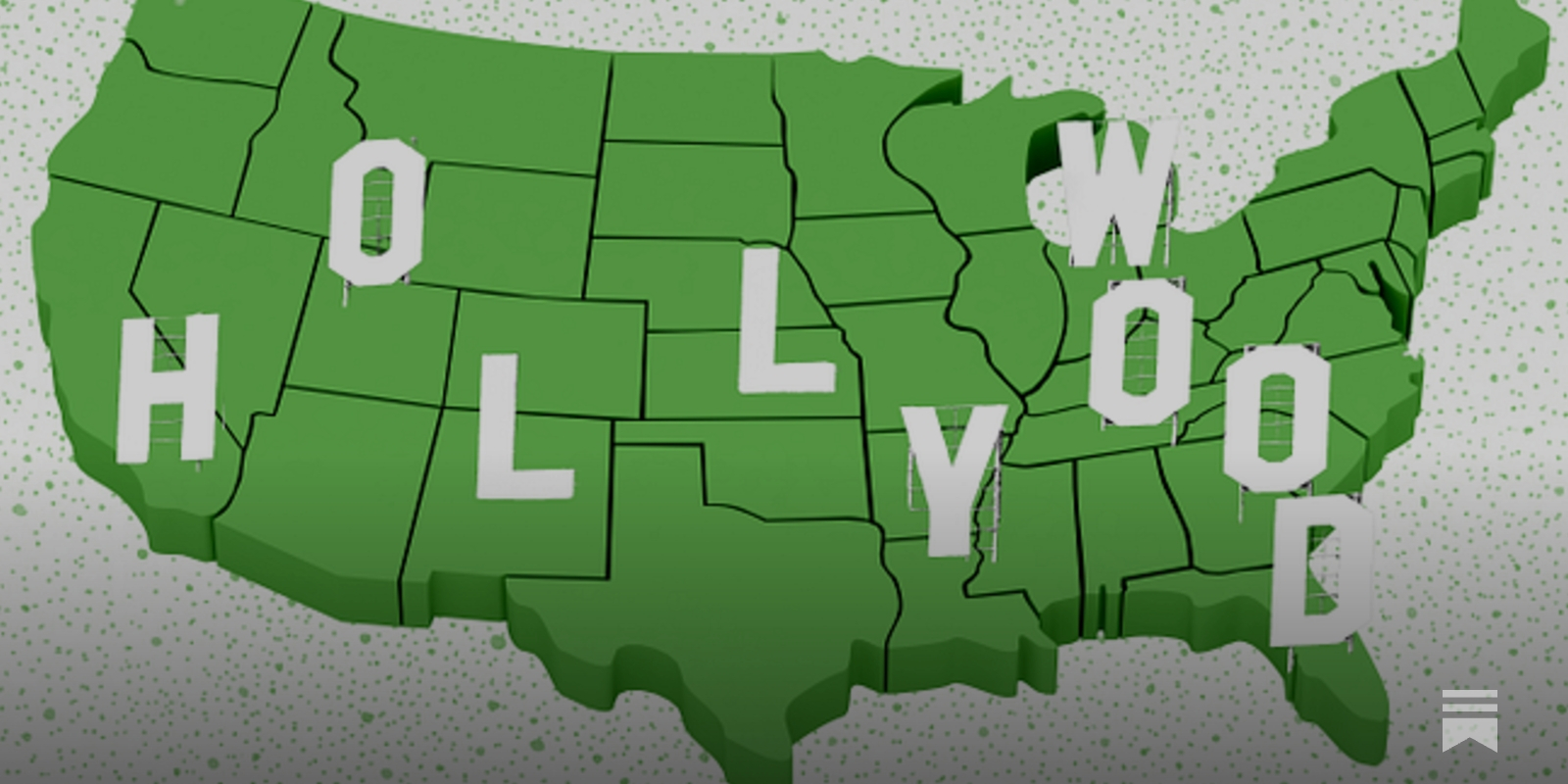
So much for the old idea of thinking of 'Hollywood' as simply a place in California. It's an idea, a whole industry, one that spans the continent - and it may be coming up for a vote in Congress before long.
Want to leave a comment? Join Bulwark+
Assigned Reading: Cheshire on Film: Life & Writings
What better way to spend this long weekend than diving into the career of Godfrey Cheshire, one of our great film critics? His new collection, which features a foreword from actor and filmmaker Alex Winter (Bill S. Preston, Esq., from the Bill and Ted series), is a fantastic journey through the filmmaking of the late 1980s through the early 2000s.
I had Godfrey on the podcast this week and it was a real treat, I hope you give it a listen. We talked about the rise and fall of the alt weeklies, the spiritual appeal of Iranian cinema, and what he got right (and wrong!) about the future of movies in his two classic pieces, "The Death of Film" and "The Decay of Cinema." Check it out:
[
Bulwark Goes to Hollywood
](https://www.thebulwark.com/p/a-witness-to-film-history-godfrey-cheshire)[
A Witness to Film History
](https://www.thebulwark.com/p/a-witness-to-film-history-godfrey-cheshire)
Sonny Bunch
·
10:03 AM
This week I'm joined by Godfrey Cheshire to discuss his new book, Cheshire on Film: Life & Writings. Cheshire is a longtime critic - in addition to writing for Variety and RogerEbert.com, among many other outlets, his stint at the New York Press with Matt Zoller Se...
[
Listen now
](https://www.thebulwark.com/p/a-witness-to-film-history-godfrey-cheshire)
Support our growing coverage of movies, books, arts, ideas, and culture - become a Bulwark+ member today:
Join Bulwark+ today
Share
1
Trump also singled out Voight in his Truth Social post. Voight is one of the three "special ambassadors" to Hollywood Trump named shortly before his inauguration; the others were Sylvester Stallone and Mel Gibson.
Source: https://www.thebulwark.com/p/will-republicans-save-the-film-industry